


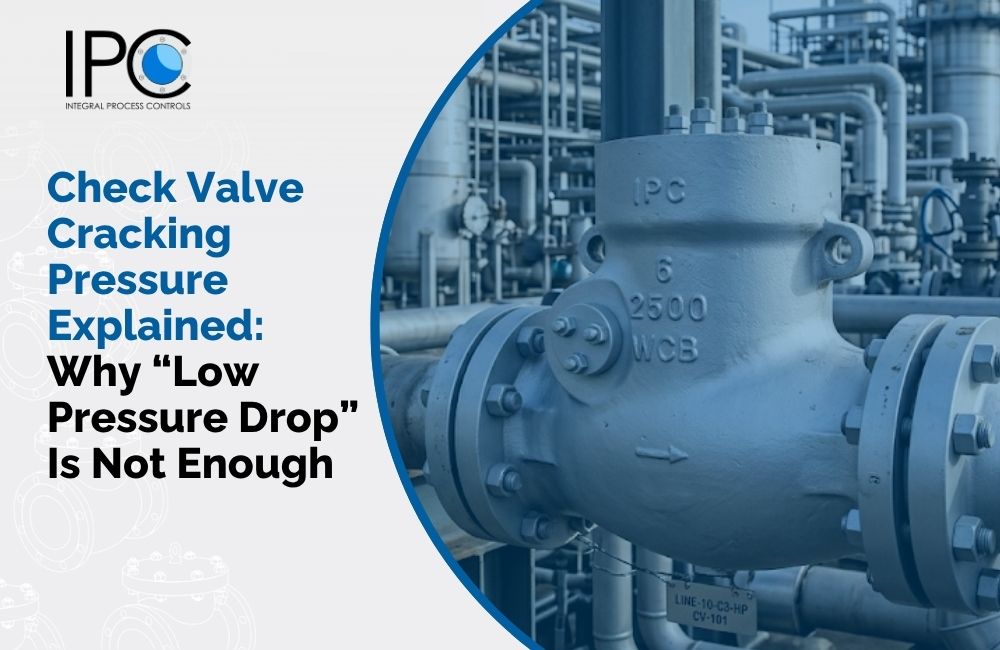
A check-valve datasheet may say “low pressure drop,” and the selection can look complete. Then the process operates at minimum flow. The internal element barely lifts, the valve becomes unstable, and chatter begins. The issue is not the pressure-drop figure. It is treating that figure as the entire selection criterion.
Cracking Pressure Is the First Step, Not the Finish Line
Check valve cracking pressure is the forward differential pressure at which the first indication of flow begins. It is not the pressure at which the valve is fully open.
In a spring loaded check valve, process flow must first overcome spring preload. It must then keep the moving element stable as flow rises. A check valve cracking pressure calculation is therefore a force-balance exercise. Spring force, friction, moving-element weight and installation orientation can all influence the result.
Why Low Pressure Drop Is Not Enough
A catalogue pressure-drop figure is normally tied to a stated flow and test condition. At actual minimum flow, a valve may not reach stable open operation. An oversized valve or a spring setting above the available differential pressure can leave the valve shut. A valve operating close to its crack point may hover near the seat and chatter.
Pulsating flow from pumps or compressors can make this worse. Each pressure pulse can move the disc or poppet toward and away from the seat. This adds wear and can create unreliable backflow protection.
Opening Is Only Half the Question
A low cracking pressure check valve is not automatically the right answer. Lower preload can help a valve open at low differential pressure. It must still reseal properly when the forward pressure falls or reverse flow begins.
Ask the supplier how check valve resealing pressure is defined and verified. The crack point and reseal condition may not be the same. This is especially important where leakage sensitivity, low back pressure or downstream liquid head is involved.
Put Real Process Conditions Into the RFQ
A useful RFQ should include:
- Minimum, normal and maximum flow
- Upstream and downstream pressure
- Available forward differential pressure
- Fluid density and viscosity at operating temperature
- Installation orientation
- Pulsation or pump-trip conditions
- Required cracking range and reseal criterion
- Test medium, temperature, orientation and available flow-versus-pressure-drop data
IPC can help match cracking and reseal behaviour to the real operating duty. The result is a clearer datasheet, better test evidence and a check-valve choice based on process behaviour—not only the lowest quoted pressure drop.