


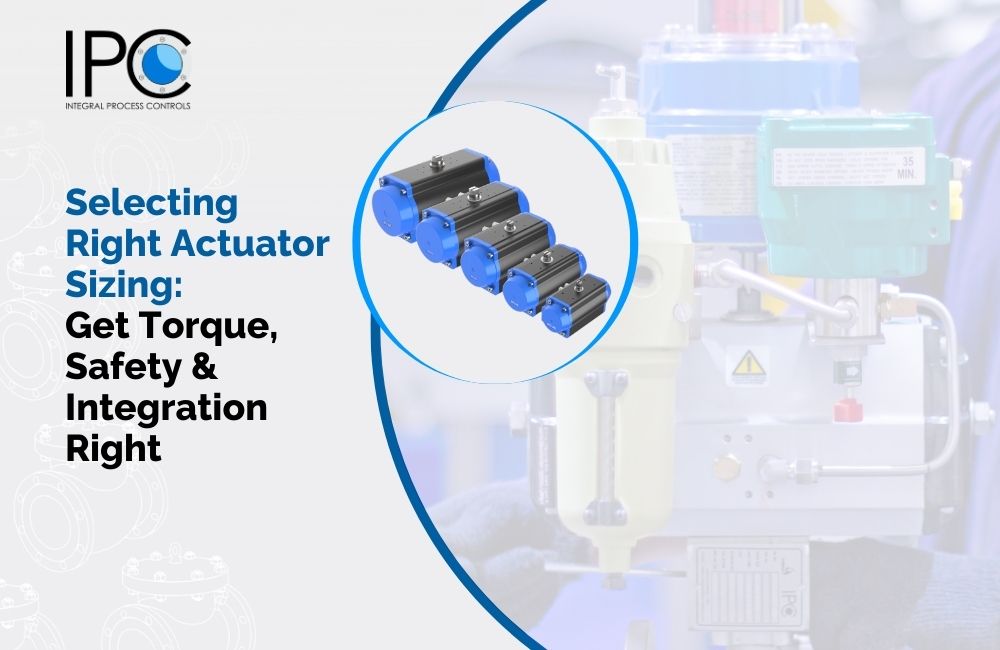
The correct actuator choice is crucial for valve performance, safety and longevity. Actuator sizing impacts the entire operation from the moment it opens or closes a valve, to how efficiently it operates over its life cycle. Getting the torque right is only the start. Integrating proper safety margins and ensuring clean automation integration are the next crucial steps to ensure reliability and performance in both quarter-turn and linear valve applications.
Getting Torque Right: Break/Run/Seat
The first and most critical step in actuator sizing is determining the breakaway torque, running torque, and seating torque.
- Breakaway Torque refers to the initial force needed to overcome friction and begin movement.
- Running Torque is the force required to maintain motion after the valve has started.
- Seating Torque is the final force needed to close the valve fully and achieve tight shut-off. Each of these torque values must be calculated to prevent under-sizing or over-sizing the actuator.
Apply Safety Margins for Reliability
When sizing an actuator, safety margins are a non-negotiable factor. This margin compensates for unexpected variations such as temperature fluctuations, system pressure dips, or potential media changes. A good practice is to apply a 40-50% safety margin on top of the calculated torques. This ensures that the actuator will always perform reliably even in challenging conditions, preventing actuator failure or unnecessary strain on the valve.
Quarter-Turn vs. Linear Actuators
Choosing between quarter-turn and linear actuators depends on the valve type and application.
- Quarter-turn actuators are typically used for ball, butterfly, and plug valves. They provide precise on/off control, rotating the valve stem 90 degrees to fully open or close the valve.
- Linear actuators, on the other hand, are best for globe control valves, which require gradual, proportional flow control.
Each actuator type requires a unique set of torque values and safety considerations based on the valve’s application.
What Happens When Valve and Actuator Sizes Don’t Match?
When the size of the actuator doesn’t align with the valve size, the results can be detrimental to both the valve’s performance and longevity. If the actuator is undersized, it may struggle to overcome the torque required to operate the valve, leading to incomplete opening or closing, excessive wear, and potential failure. On the other hand, an oversized actuator may generate unnecessary forces that damage the valve components, causing premature seat erosion or stem wear. In both cases, the system becomes inefficient, requiring more frequent maintenance and potentially leading to costly downtime. Matching the actuator size to the valve ensures smooth, reliable operation, reduces strain on both components, and ultimately extends the lifespan of both the valve and actuator.
Consider Supply Pressure Dips and Temperature Derating
The actuator’s performance can be significantly influenced by changes in supply pressure and temperature. For example, a drop in pressure can reduce the actuator’s available torque, which is why you should calculate its performance at the lowest expected pressure level. Additionally, actuators need to be derated when exposed to extreme temperatures, as high heat can affect their mechanical properties, while cold temperatures can increase friction, impacting both speed and torque.
IPC’s Approach to Actuator Sizing
At IPC, we approach actuator sizing with precision and care. Our expert team ensures that every actuator is perfectly matched to its corresponding valve, accounting for all variables: break/run/seat torque, safety factors, pressure, temperature, and actuator-to-valve integration. Whether you’re working with a quarter-turn or linear valve, our solutions ensure efficiency, durability, and long-term reliability.