
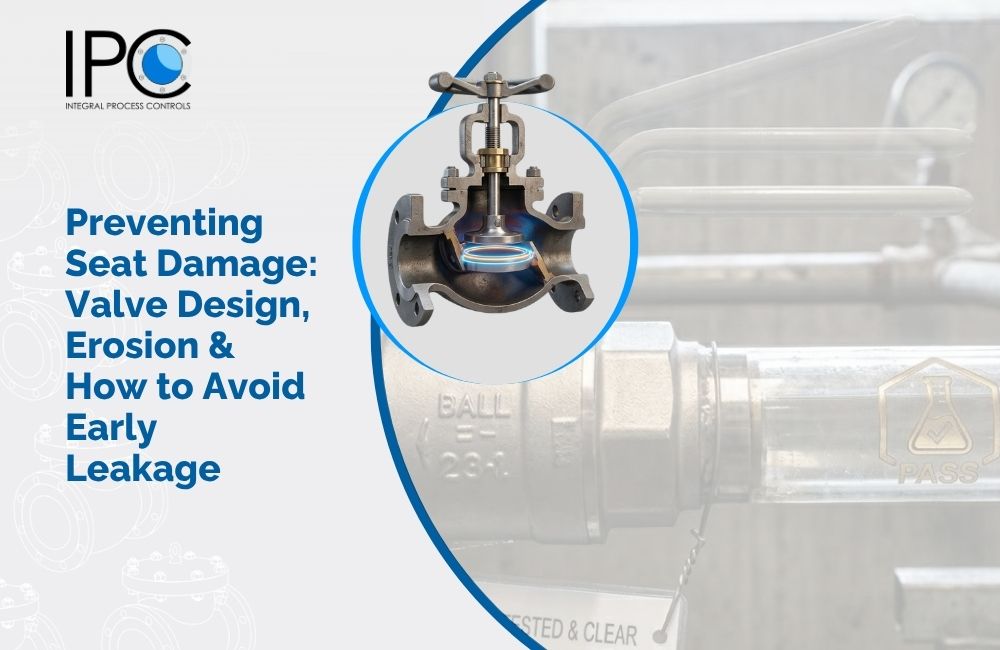
When you walk through a refinery, chemical plant or power generation facility, you see valves everywhere gate valves, globe valves, ball valves each performing critical functions. But there’s a feature inside many of these valves that most operators never think about until something goes wrong: the valve backseat.
A valve backseat is one of those elegant mechanical designs that solves multiple problems simultaneously. It provides a secondary seal between the stem and bonnet, protects the packing from high-pressure fluid, and in many cases allows packing replacement while the system remains pressurized. Understanding how backseating works, along with modern stem seal technologies, is essential for anyone responsible for valve maintenance, specification, or reliability.
At IPC, with over 25 years of experience serving the oil and gas, power, steel, fertiliser and chemical sectors, we’ve seen how proper understanding of these features extends valve life and prevents unplanned downtime.
What Is a Valve Backseat?
A valve backseat is a secondary sealing feature designed into many gate and globe valves. When the valve is fully opened, the back of the disc or a specialized shoulder on the stem contacts a mating surface inside the bonnet. This creates a metal-to-metal seal that isolates the stem packing from system pressure.
How It Works
In a typical rising stem valve:
- Normal operation: The stem moves through the packing (stuffing box), which provides the primary seal against leakage.
- Fully open position: The valve stem is drawn up until a shoulder on the stem contacts a matching seat inside the bonnet.
- Backseat engaged: This metal-to-metal contact creates a secondary seal that prevents pressurized fluid from reaching the packing.
Think of it as a backup plan. The packing does the daily work of sealing the moving stem. But when the valve is fully open, the backseat takes over, giving the packing a break from constant pressure exposure.
The "Front Seated vs Back Seated" Distinction
Understanding front seated vs back seated valve positions is crucial for proper operation:
Position | Description | Application |
Back Seated | Stem fully open, secondary seal engaged | Normal operation for isolation valves; protects packing |
Front Seated | Disc fully closed against seat | Flow isolation; primary shut-off position |
Mid-Seated | Stem partially open | Flow control; neither seat fully engaged |
In HVAC and refrigeration applications, technicians often use similar terminology. A valve that is back-seated (stem all the way out) provides full flow through the valve body but is closed to any access port . This is functionally identical to the backseat in industrial valves it isolates the packing/sealing area from the main flow path.
The Critical Functions of Backseating
1. Protecting the Packing
The primary purpose of the backseat is to shield the stem packing from continuous exposure to line pressure, temperature, and process media. Packing materials whether graphite, PTFE or specialized compounds degrade over time when subjected to harsh conditions. By allowing the backseat to take over when the valve is fully open, you extend packing life significantly.
2. Enabling In-Service Maintenance
This is perhaps the most valuable operational benefit. In many valve designs, a functional backseat allows maintenance personnel to replace stem packing while the valve is in service and under pressure. Here’s how:
- Open the valve fully to engage the backseat.
- Verify that the backseat is holding (by monitoring the bonnet vent, if available).
- Remove the packing gland nuts and old packing safely.
- Install new packing while the system remains operational.
- Repressurize the packing area and return the valve to normal service.
This capability can eliminate costly shutdowns for packing replacement on critical isolation valves.
3. Providing a Secondary Barrier
Even when not being used for maintenance, the backseat serves as a redundant seal. If the primary packing begins to leak, the backseat when engaged provides an immediate secondary barrier, buying time for planned maintenance rather than emergency response.
Stem Sealing: The Primary Defense
While the backseat is a valuable backup, the primary responsibility for preventing valve leakage from stem areas falls to the stem seal system. This is the packing arrangement that seals around the moving stem during normal operation.
Compression Packing: The Workhorse
Compression packing remains the most common method for sealing valve stems. It consists of multiple rings of soft material (graphite, PTFE, or specialized compounds) arranged in a “stuffing box” around the stem. A gland follower compresses these rings axially, forcing them to expand radially against both the stem and the stuffing box wall .
The physics are straightforward: to seal effectively, the contact pressure at the packing-stem interface must exceed the fluid pressure trying to escape . But achieving this balance without creating excessive friction is the engineering challenge.
Live-Loaded Packing: The Maintenance Reducer
Standard packing loses compressive force over time due to wear, thermal cycling, and material relaxation. This leads to valve leaking from stem and requires periodic gland tightening.
Live-loaded packing solves this by incorporating springs typically Belleville disc springs into the packing arrangement. These springs maintain constant compression on the packing, automatically compensating for wear and thermal movement
Bellows Seals: Zero-Leakage Solution
For applications where any leakage is unacceptable toxic fluids, nuclear service, critical hazardous materials bellows seals provide the ultimate protection.
A bellows seal uses a welded metal bellows as the dynamic seal between stem and bonnet. The bellows compresses and expands with stem movement, creating a physical barrier that completely isolates the process fluid from the atmosphere
Common Causes of Stem Leakage
Understanding why valve leakage occurs helps in prevention and troubleshooting:
1. Surface Finish Issues
Research has shown that stem surface roughness is a primary factor in packing failure. In one study, a valve failed a fugitive emission test because graphite packing deposited on a rough stem surface during cycling . Proper stem finish (typically 8-16 Ra microinches) is essential.
2. Packing Wear and Relaxation
Over time, packing materials compress, cold-flow, or wear. Without live-loading, this reduces sealing force.
3. Thermal Cycling
Temperature changes cause differential expansion between stem and body, potentially creating momentary leak paths.
4. Corrosion and Pitting
Long-term service in corrosive environments can damage stem surfaces, creating leak paths that packing cannot seal.
5. Improper Installation
Incorrect packing ring arrangement, insufficient compression, or damaged components during assembly all lead to premature failure.
IPC's Approach to Stem Sealing
At IPC, we engineer our gate, globe, check, and ball valves with stem sealing as a priority, not an afterthought. Our designs incorporate:
- Precision-finished stemsto specified surface roughness for optimal packing life.
- Live-loading optionsfor applications requiring reduced maintenance.
- Packing configurationsqualified to relevant fugitive emission standards.
- Clear documentationof backseat functionality and test procedures.
- Material selection guidanceto match stem and packing materials to your process conditions.
With 25+ years of experience and a 25,000+ sq. ft. manufacturing facility, we build valves that operators can trust for reliable, leak-free performance over the long term.
Conclusion: Protect the Seat, Protect the System
The humble valve backseat is one of those mechanical features that quietly prevents disasters and enables maintenance flexibility. Combined with modern stem seal technologies whether compression packing, live-loaded systems, or bellows seals it forms a comprehensive defense against valve leakage.
Understanding how these systems work, how to test them, and when to use (or not use) the backseat feature will make you a better operator and your plant a safer, more reliable facility.
For engineers and maintenance professionals: treat the backseat as the valuable tool it is, but respect its limitations. Verify its function, document its performance, and never assume it will work without proof.
Ready to specify valves with reliable stem sealing for your application? Contact IPC’s technical team for guidance on valve selection, packing materials, and backseat configurations tailored to your process conditions.