


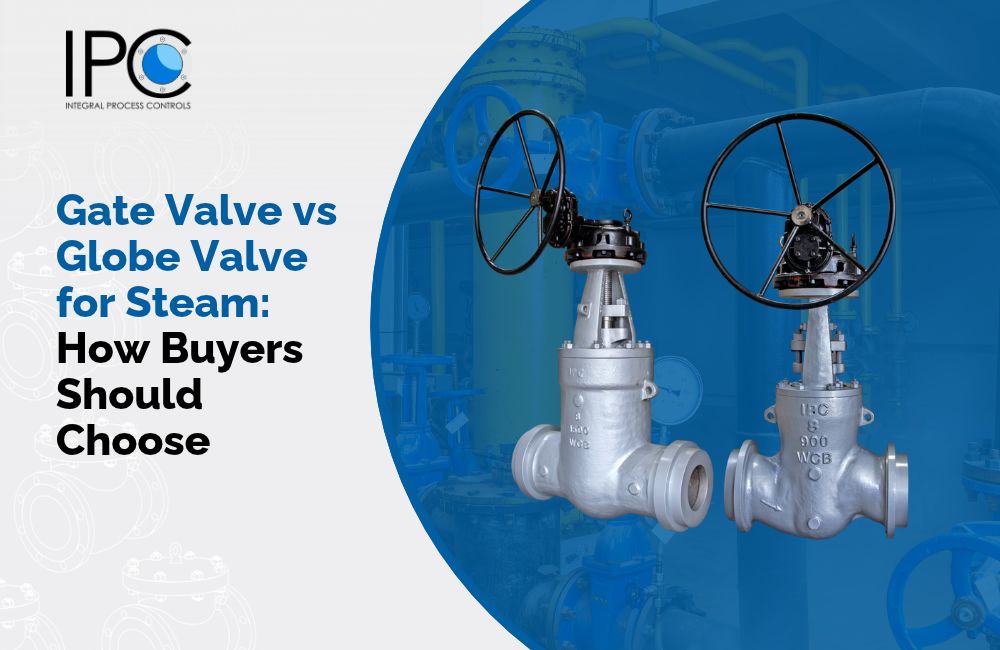
A steam-line RFQ can start with a small question: “Gate valve or globe valve?” Yet that decision affects available pressure, control stability and valve life. Both can be used on a steam system. They should not be treated as interchangeable.
Choose a Gate Valve for Steam When Isolation Is the Job
A conventional gate valve for steam is strongest in a full-open or full-closed isolation role. When fully open, its wedge clears the bore. It typically creates lower pressure loss than a comparable conventional globe design. That matters on main steam lines where retaining downstream pressure has real process value.
Do not use a standard gate valve for sustained throttling unless the exact design is manufacturer-rated for that duty. A partly open gate can expose seating surfaces to high-velocity steam. Vibration, wire-drawing and faster wear may follow.
Choose a Globe Steam Valve for Deliberate Regulation
A globe steam valve takes a less direct flow path. It usually accepts a higher pressure-loss trade-off in return for greater throttling potential. For deliberate modulation, specify a purpose-designed and correctly sized globe/control configuration. A manual globe stop valve is not automatically a control valve.
Install the valve in the manufacturer’s marked flow direction and approved orientation. This detail varies by design. It should never be copied from another valve type or old line drawing.
Five Buyer Checks Before Ordering
- Duty: Is the valve isolating, warming up a line, regulating flow or doing more than one job?
- Steam conditions: Review design and operating pressure/temperature, steam condition, minimum/normal/maximum flow and differential pressure.
- Pressure-loss allowance: Confirm whether the line needs low-loss isolation or controlled flow regulation.
- Warm-up and sealing: Use a documented controlled warm-up and condensate-removal arrangement. A parallel bypass may be suitable, but it does not replace drip legs, traps or low-point drainage.
- Operation and acceptance: Check material, trim, bonnet, packing, operator load and applicable testing, traceability and documentation requirements.
A high pressure steam valve is not selected by pressure class alone. The real service duty, temperature rating, differential pressure, steam quality and cycling pattern all matter.
This is where an early IPC review adds value. With actual process details, IPC can help align material, trim, bonnet, packing and operating arrangement with the steam duty. Testing and documentation can then be matched to project requirements before the purchase order is released.
For gate valve vs globe valve for steam, start with the job the valve must perform. Gate valves generally suit isolation. Globe/control configurations suit deliberate regulation.