


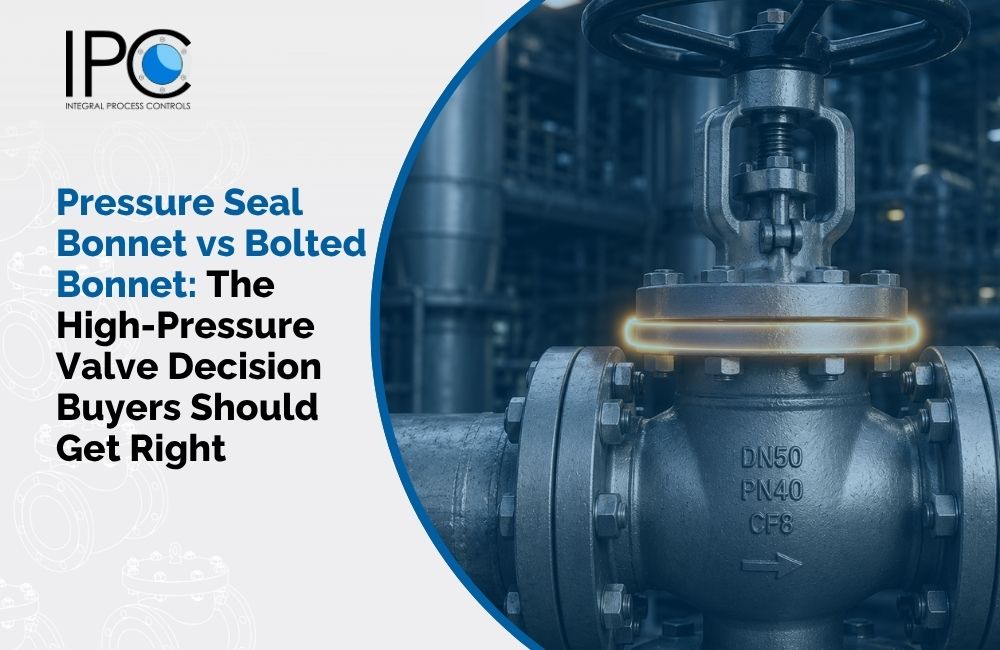
Why bonnet design matters in industrial valves
In a valve, the bonnet is not just a top cover.
It is part of the pressure boundary.
When this joint fails, the result is not a small inconvenience. It can lead to steam leakage, pressure loss, safety risk, repeated maintenance and unplanned shutdowns.
That is why buyers must choose the right bonnet design before placing the order.
For gate, globe, and check valves, the two common options are bolted bonnet and pressure seal bonnet.
What is a bolted bonnet valve?
A bolted bonnet valve uses bolts and a gasket to seal the body and bonnet joint.
It is widely used in low-pressure, medium-pressure, and many standard industrial applications. It is easy to open, inspect, service, and reassemble.
For many process lines, utilities, water, oil, gas and general steam duties, bolted bonnet construction works very well.
But it depends on one important thing: correct gasket compression.
If bolt load becomes uneven, or if the line is subjected to repeated heating and cooling, the gasket stress can reduce over time. That is when bonnet leaks begin.
What is a pressure seal bonnet valve?
A pressure seal bonnet works differently.
Here, internal pressure helps tighten the seal. As pressure increases, the sealing force improves.
This makes pressure seal bonnet valves more suitable for high-pressure and high-temperature applications, especially in power plants, boiler systems, high-pressure steam lines and critical isolation duties.
In simple words, the design uses pressure to its advantage.
Leak risk and thermal cycling impact
Bolted bonnet valves rely mainly on bolt load and gasket sealing.
During thermal cycling, metal expands and contracts. This can slowly reduce gasket compression and create a leak path.
Pressure seal bonnet valves are better suited for severe pressure and temperature conditions. They reduce bonnet leak risk when the application is demanding.
But pressure seal construction must be made correctly. The sealing faces, gasket material, machining accuracy and assembly process must be tightly controlled.
Buyer selection guide
Before selecting bolted bonnet or pressure seal bonnet, check this:
1. Pressure class Higher pressure duties may need pressure seal construction.
2. Operating temperature High-temperature steam or boiler lines need extra attention.
3. Thermal cycling Frequent heat-up and cool-down cycles increase bonnet leak risk.
4. Leak criticality If bonnet leakage can stop production or create safety risk, select more carefully.
5. Maintenance access Bolted bonnet may be easier for routine maintenance.
6. Documentation Ask for drawings, material traceability, test reports, and pressure test records.
7. Manufacturer expertise The right bonnet type depends on application judgment, not just catalog selection.
How IPC helps buyers choose correctly
IPC studies the pressure, temperature, media, valve size, duty cycle and maintenance expectations before recommending the bonnet design.
For standard applications, IPC offers reliable bolted bonnet construction with proper gasket seating and testing.
For high-pressure and high-temperature applications, IPC recommends pressure seal bonnet construction where it adds real value.
This helps buyers reduce bonnet leak risk, improve safety and achieve better long-term valve performance.
For critical gate, globe, and check valve requirements, IPC supports you with the right bonnet selection, tested performance and complete documentation.