


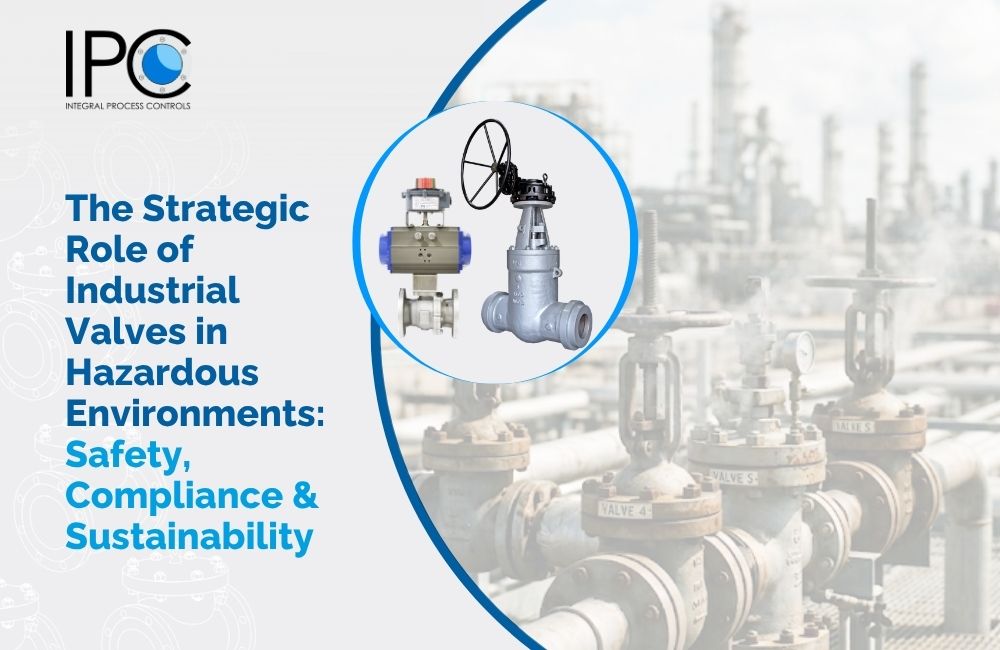
In a refinery, chemical plant or offshore platform, every valve is a potential point of failure. But in hazardous environments where flammable gases, toxic chemicals or high-pressure steam flow through every pipe that potential carries life-or-death consequences.
The numbers are stark. Valve leakage is reportedly responsible for more than 65% of total fugitive emissions in industrial facilities, by some estimates. Fugitive emissions contribute approximately 15% of global greenhouse gas emissions, with an intensity of 90 kg CO₂e/boe. And research indicates valves have traditionally contributed up to 60% of the emissions in a running plant
They represent real risks: explosion and fire from flammable gas leaks, health hazards from toxic exposure, environmental degradation, and oxygen displacement in confined spaces that can be fatal. In hazardous environments, an industrial valve is not merely a flow control device. It is a safety barrier, an environmental guardian, and a regulatory checkpoint—all in one.
Why Valves Are Critical in The Hazardous Environment Landscape.
Hazardous environments share common characteristics: the presence of flammable, toxic or reactive substances; elevated pressures and temperatures and the potential for rapid escalation if containment fails. Industries that operate in these conditions include:
- Oil and gas (upstream, midstream, downstream)
- Petrochemical and chemical processing
- Power generation (including nuclear and thermal)
- Pharmaceutical manufacturing
- Fertilizer production
- Refining and hydrocarbon processing
In each of these sectors, valves serve as the primary interface between process fluids and the external environment. When a valve fails whether through stem leakage, seat degradation, or body rupture the consequences can cascade rapidly.
Safety Certification & The Critical Language of Hazard Readiness
A valve’s fitness for hazardous service is not a matter of manufacturer claims. It is proven through rigorous, standardized testing and third-party certification.
Understanding these certifications is essential for engineers and procurement professionals.
Fugitive Emission Standards: Controlling the Invisible Threat
Fugitive emissions unintended leaks from valve stems, body joints, and connections are among the most significant hazards in process plants. The industry has responded with multiple standards:
| Standard | Scope | Key Requirement |
| ISO 15848-1 | Type testing for industrial valves | Three tightness levels (A, B, C); separate testing of stuffing box and body joint tightness |
| API 622 | Packing qualification for fugitive emissions | 310 mechanical cycles with three thermal cycles |
| API 624 | Rising stem valves with graphite packing | 100 ppmv maximum leakage; methane test medium; 310 cycles; no retightening during test |
| API 641 | Quarter-turn valves for fugitive emissions | External leakage below specified ppm levels for hydrocarbon service |
| EPA Method 21 | Field measurement of VOC leaks | Defines measurement techniques using portable instruments |
The API 624 standard is particularly stringent. It requires valves to undergo 310 test cycles with three thermal cycles, temperatures ranging from –29°C to 538°C, with no permitted retightening of gland bolts during testing. The allowable leakage is 100 ppm maximum. Valves larger than NPS 24 or greater than Class 1500 are outside the scope of this standard.
For hazardous media service, ISO 15848-1 has become increasingly influential. It mandates separate testing of stuffing box tightness (from which tightness classes derive) and body joint tightness (50 ppm acceptable). Helium or methane is used as the test medium, and three tightness levels (A, B, C) can be specified.
At IPC, gate valves are tested to meet API 624 requirements, while ball valves follow ISO 15848 standards, ensuring reliable performance even in the toughest hazardous conditions.
Safety Integrity Level (SIL) Certification
| SIL Level | Required Risk Reduction | Probability of Failure on Demand (PFDavg) |
| SIL 1 | 10 to 100 | 0.1 to 0.01 |
| SIL 2 | 100 to 1,000 | 0.01 to 0.001 |
| SIL 3 | 1,000 to 10,000 | 0.001 to 0.0001 |
Explosive Atmosphere Compliance (ATEX, PESO)
In environments where explosive atmospheres may be present chemical plants, refineries, paint and dye manufacturing valve accessories such as limit switch boxes require special protection. ATEX certification (EU) and PESO certification (India) ensure that electrical components are safe to use in explosive atmospheres, with flameproof designs that contain internal sparks and prevent ignition of surrounding gases.
IPC’s flameproof limit switch boxes are designed with thick reinforced enclosures, optimized flame paths, and superior wire termination, ensuring zero ignition risk even in the most hazardous classified areas.
Safety Is Not an Option It's an Engineering Requirement
In hazardous environments, industrial valves serve a strategic role that extends far beyond flow control. They are safety barriers, environmental guardians, and regulatory checkpoints that protect personnel, assets, and the planet.
The global industrial safety valve market is projected to grow to over USD 10 million by 2035, driven by rapid industrialization, adherence to safety standards, and increasing environmental protection concerns. Understanding the certifications ISO 15848, API 624, API 607, NACE MR0175, SIL, ATEX is not about checking boxes. It is about specifying equipment with proven real-world readiness.
The bottom line: Specifying valves for hazardous service requires a systematic approach that addresses fugitive emission control, fire safety, sour service resistance, and functional safety integrity. By partnering with a manufacturer like IPC that demonstrates technical depth, comprehensive certifications, and a proven track record across hazardous industries, you make a strategic investment in safety that pays dividends in reliability, compliance, and peace of mind.
Ready to specify valves for your hazardous environment application? Contact IPC’s technical team for expert guidance on safety-certified valves, fugitive emission requirements, and application-specific material selection.